Common Used Car Red Flags Every Buyer Should Recognize
Shopping for a pre-owned automobile offers an excellent opportunity to bypass initial depreciation, secure advanced vehicle features at an accessible price point, and keep monthly household transportation expenses manageable. With modern vehicles engineered to operate reliably past the hundred-thousand-mile threshold, a well-maintained secondhand vehicle can provide years of trouble-free service. However, the pre-owned vehicle marketplace also contains distinct financial hazards. For every thoroughly serviced, accident-free car offered by a reputable seller, there are dozens of vehicles harboring hidden flood damage, concealed structural damage, unaddressed mechanical failures, or fraudulent documentation.
An attractive, freshly polished exterior and an aromatic, freshly vacuumed interior can easily disguise severe underlying neglect. Less-than-scrupulous dealers, curbstoners, and private sellers routinely employ temporary cosmetic fixes to push compromised vehicles onto unsuspecting buyers. Entering the pre-owned market without a structured inspection methodology invites emotional decision-making, costly post-purchase repair bills, and serious safety hazards. To protect your investment, you must learn to read the mechanical, structural, and legal indicators that reveal a vehicle true history before signing paperwork or handing over funds.
Title Status and Paperwork Discrepancies
The single most consequential checkpoint in any used car evaluation has nothing to do with what sits under the hood. It lives entirely within the legal paperwork establishing ownership. A vehicle with mechanical defects can usually be repaired, but a vehicle with compromised title paperwork presents ongoing legal liabilities, registration roadblocks, and insurance coverage refusals.
Never finalize a purchase without a thorough inspection of the vehicle title document and corresponding identification plates.
-
Branded and Non-Clean Titles: Be vigilant for terms such as salvage, rebuilt, lemon law buyback, flood, junk, or watercraft on the title face. A rebuilt or salvage brand indicates that an insurance carrier previously deemed the car a total loss following a crash, natural disaster, or major theft recovery. While some rebuilt vehicles are repaired adequately, many suffer from permanent frame alignment issues, compromised safety restraint wiring, and zero structural crash integrity.
-
Title Jumping or Floating: If the private individual standing before you cannot produce a physical title issued in their exact legal name, walk away immediately. Title jumping occurs when an unlicensed reseller buys an automobile, skips legally registering it with the state motor vehicle agency to dodge sales taxes, and then attempts to resell it using the previous owner signature. This practice is illegal and leaves you vulnerable if the car carries active liens, back taxes, or stolen-property flags.
-
Mismatched Vehicle Identification Numbers: Check the seventeen-character Vehicle Identification Number stamped on the driver-side dashboard plate, visible through the lower edge of the windshield. Cross-reference that alphanumeric string against the federal safety certification sticker inside the driver-side door jamb, the physical paper title, and the registration card. If any numbers or letters fail to match, the vehicle may have undergone a body swap or been assembled from stolen component sections.
-
Inconsistent Odometer Records: Obtain an independent history report to review historical mileage recordings logged during state safety checks, emissions tests, and dealer services. If the vehicle odometer currently reads sixty-five thousand miles, but an emissions station logged eighty-two thousand miles two years prior, you are likely dealing with digital odometer tampering.
Treating title verification as non-negotiable prevents you from purchasing an uninsurable asset that cannot be legally registered in your home state.
Hidden Bodywork, Collision Repairs, and Structural Rust
Modern passenger vehicles rely on unibody engineering, where the chassis, frame rails, floor pans, and roof pillars form a unified structural safety cage designed to manage crash forces through engineered crumple zones. When a vehicle experiences a major collision, those structural members deform to absorb kinetic energy. Straightening bent frame rails with industrial hydraulic equipment rarely restores factory rigidity.
Spotting prior collision repairs requires looking past fresh paint and examining factory assembly details:
-
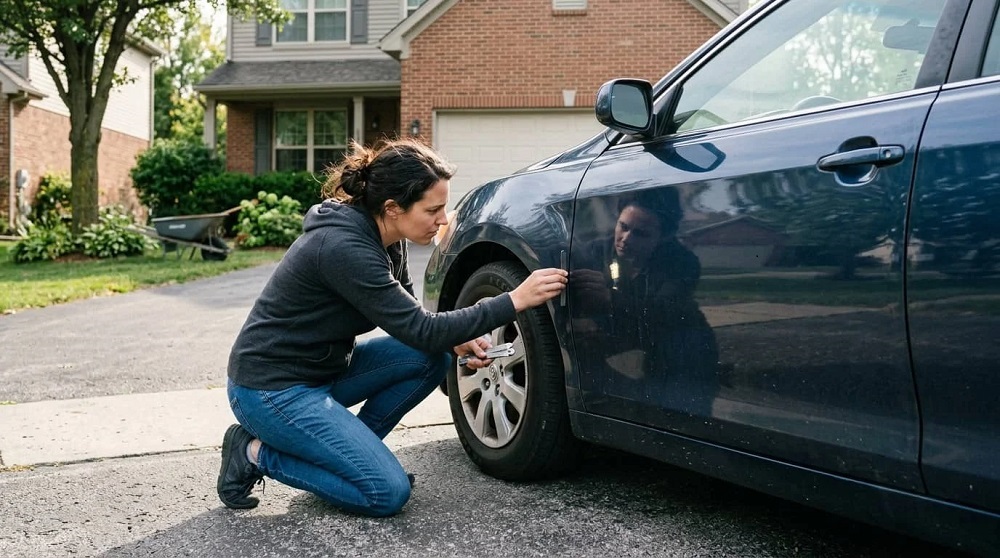
Inconsistent Panel Gaps: Stand directly in front of and behind the vehicle to observe the horizontal and vertical margins between body panels. The gaps between the hood and fenders, front doors and rear doors, and trunk lid and quarter panels should be uniform from top to bottom. If a panel gap is tight at the top and wide at the bottom, the underlying frame or core support is likely misaligned from a past collision.
-
Overspray and Paint Inconsistencies: Run your fingers along the rubber weatherstripping surrounding windows, door handles, and taillight housings. If you feel rough edges or discover dried paint on rubber gaskets, the vehicle received an aftermarket respray. Furthermore, inspect the vehicle under direct natural sunlight to check for subtle color mismatches between adjacent panels, which signals panel replacement.
-
Missing or Replaced Fasteners: Examine the hex bolts securing the front fenders, hood hinges, and door hinges. Factory assembly lines paint over these bolts after mounting. If you see chipped paint, raw metal, or tool marks on the bolt heads, those panels have been removed, adjusted, or replaced following an accident.
-
Deep Structural Underside Rust: Surface oxidation on cast-iron steering knuckles or exhaust pipes is common in winter salt-belt states. However, structural rust that bubbles through subframe rails, rocker panels, shock towers, or floor pans destroys crash safety and makes basic suspension repairs impossible. Probe any flaky, bubbling metal with your knuckles; if the metal flakes away or feels soft, avoid the vehicle.
A car with a compromised unibody cannot properly protect its occupants in a secondary collision, regardless of how cleanly its exterior paint has been buffed.
Warning Signs of Water, Flood, and Hurricane Damage
Floods destroy vehicles from the inside out. When floodwaters submerge an automobile, silt, mud, and corrosive minerals enter delicate computer control modules, wiring harnesses, transmission solenoids, and sound-dampening floor pads. Because cosmetic flood damage is relatively easy to mask with professional detailing tools, dishonest sellers regularly transport flooded vehicles away from disaster zones to resell in unaffected inland states.
Identifying a water-damaged automobile requires trusting your senses of smell and touch:
-
Persistent Musty Odors or Heavy Fragrance: A vehicle interior should smell neutral. If a car exhibits a strong musty, damp mold odor when opening the door, water intrusion has occurred. Conversely, be wary of sellers who place multiple heavy air fresheners or ozone deodorizing units inside the cabin, as this often masks decaying organic matter trapped within the carpet padding.
-
Silt and Sand in Hidden Interior Cavities: Pull the seatbelts completely out of their B-pillar retractors to inspect the very end of the woven webbing. Counterfeit cleaners rarely wash the retracted belt ends, which often display high-water tide marks or dried silt stains. Additionally, look beneath the dashboard with a flashlight to inspect unpainted steel bracketry; exposed steering column brackets should show clean metal, not chalky orange rust.
-
Trapped Moisture Inside Lens Housings: Condensation, water droplets, or dark silt lines visible inside headlights, taillights, or interior instrument gauges indicate direct water submergence.
-
Corroded Electrical Connectors: Inspect the fuse box located under the hood or beneath the dashboard. Pull a couple of accessible fuses or relays to check the metal terminal pins. If you discover green or chalky white copper oxidation, the electrical distribution block has been submerged, which will inevitably trigger ongoing electrical malfunctions.
Automobiles exposed to standing water become operational nightmares, developing mysterious electrical shorts, malfunctioning anti-lock brake computers, and non-functioning airbag modules months after the initial purchase.
Mechanical Red Flags Under the Hood and Engine Health
The powertrain is the financial heart of an automobile. Engine rebuilds and transmission replacements easily exceed the current market value of an older pre-owned car. Assessing mechanical condition requires inspecting the engine when it is completely cold, observing the initial start-up, and verifying fluid health.
Before turning the ignition key, pop the hood and conduct an initial fluid audit:
-
The Milky Oil Dilemma: Pull the engine oil dipstick and inspect the underside of the oil filler cap. If the oil resembles chocolate milkshake or creamy coffee, engine coolant is actively mixing with the motor oil. This condition points directly to a blown cylinder head gasket, a cracked engine block, or a failed internal oil cooler, all of which require extensive engine disassembly.
-
Burnt or Discolored Transmission Fluid: If the vehicle is equipped with a traditional transmission dipstick, inspect the fluid on a clean white paper towel. Healthy automatic transmission fluid displays a clear pinkish-red color. If the fluid is dark brown, opaque black, or smells distinctly like burnt toast, the internal friction clutches are slipping and the transmission is on the verge of mechanical failure.
-
Pre-Warmed Engine Suspicion: When you arrive for an inspection appointment, place your bare hand on the intake manifold or upper radiator hose. If the engine is already warm, the seller may have deliberately run the car before your arrival. This tactic is used to mask cold-start issues, such as rattling timing chains, squealing belts, prolonged cranking, or thick blue exhaust smoke that dissipates once internal metals expand.
-
Excessive Engine Blowby: With the engine idling safely in park, loosen the oil filler cap and let it sit loosely over the opening. If the cap dances gently, crankcase pressure is normal. If the cap is blown off by strong bursts of smoke and pressurized air, the internal piston rings or cylinder walls are severely worn, leading to high oil consumption and loss of compression.
Take your time around the engine bay. Oil leaks running down the front of the timing cover or valve covers, deteriorated vacuum lines, and cracked rubber drive belts show that the prior owner neglected basic maintenance routines.
Road Test Dynamics: Steering, Braking, and Powertrain Behavior
A static inspection in a driveway reveals only half the story. You must drive the car across varied operational conditions, including residential stop-and-go streets, rough pavement, and open highway speeds, to evaluate dynamic behavior under load.
Pay close attention to sensory feedback throughout the test drive:
-
Delayed or Harsh Transmission Shifts: When shifting from park into reverse or drive, the gear should engage smoothly within one second. A long hesitation followed by a violent mechanical clunk indicates low hydraulic pressure or worn internal solenoids. During acceleration, gears should change seamlessly without engine revs flaring upward between shifts, which is a clear sign of slipping clutches.
-
Pulsations, Pulls, and Squeals During Braking: Apply the brakes firmly on an open, flat stretch of road while maintaining a loose grip on the steering wheel. If the vehicle pulls hard to one side, a brake caliper is sticking, or the front suspension bushings are severely torn. A rhythmic pulsation felt through the brake pedal points to warped brake rotors, while a loud metal-on-metal grinding sound means the friction pads have worn down completely.
-
Suspension Clunks and Loose Steering: Drive over railroad tracks or a rough stretch of road at moderate speeds. Rhythmic knocking, rattling, or metallic bangs indicate worn sway bar end links, bad ball joints, or leaking suspension struts. Furthermore, the steering wheel should exhibit minimal dead-zone play; if you can turn the wheel an inch in either direction without moving the front tires, the steering rack or tie-rod ends are worn out.
-
Exhaust Smoke Diagnostic Color Codes: Have a companion watch the tailpipe during initial startup and brisk acceleration. Thick blue-gray smoke indicates burning motor oil due to worn valve stem seals or failed piston rings. Dense white smoke that hangs in the air and smells sweet indicates burning coolant from a failed head gasket. Heavy black smoke points to an overly rich fuel mixture, caused by stuck fuel injectors or failed airflow sensors.
Any vehicle that hesitates, stutters, vibrates at speed, or tracks unevenly across lanes should be viewed with extreme caution, as chassis and drivetrain repairs add up quickly.
Electronic Diagnostics and Warning Light Tampering
Modern vehicles contain dozens of networked electronic control units that record historical fault codes, emissions sensor readiness, and system errors. Unethical sellers often seek to bypass diagnostic trouble codes by utilizing inexpensive code readers to clear check-engine lights just minutes before a prospective buyer arrives.
You can uncover diagnostic deception by using an inexpensive handheld diagnostic tool or paying close attention to the dashboard instrument cluster.
When you turn the vehicle ignition key to the run position without starting the engine, all dashboard indicator lights must illuminate simultaneously as a bulb check.
Look specifically for the check engine, anti-lock brake system, and supplemental restraint airbag symbols. If these indicators fail to illuminate during the bulb check, a seller may have physically removed the bulb, placed black tape behind the gauge cluster, or cut the circuit trace to conceal an active system failure.
Furthermore, plug an On-Board Diagnostics II scanner into the port beneath the steering column to review the monitor readiness status. If the scanner displays that the catalytic converter, oxygen sensor, or evaporative emissions monitors read as not ready, the onboard computer has been cleared recently.
A freshly cleared computer means you cannot verify whether the engine runs clean.
In emissions-testing jurisdictions, an automobile with unready monitors cannot pass official state emissions checks, leaving you unable to legally register the vehicle until hundreds of dollars are spent tracking down vacuum leaks or replacing catalytic converters.
Seller Demeanor, Pressure Tactics, and Safe Purchasing Protocols
How a seller behaves during an evaluation is just as telling as the physical condition of the car. Whether you are dealing with an independent dealership or a private owner on a classified platform, ethical sellers maintain transparent records, answer questions directly, and welcome independent technical verification.
Recognizing behavioral red flags protects you from high-pressure sales environments:
-
Refusing an Independent Pre-Purchase Inspection: The most critical red flag in used car transactions is a seller refusing to allow you to take the vehicle to a licensed independent mechanic for a pre-purchase inspection. Any resistance to an off-site mechanical audit is a strong signal that the seller is hiding a known defect.
-
Artificial Urgency and Emotional Pressure: Be cautious of individuals who claim another buyer is arriving with cash in thirty minutes or insist that you must sign paperwork immediately to secure the deal. Artificial urgency is engineered to short-circuit your analytical reasoning and discourage you from conducting a thorough inspection.
-
Incomplete Service History Explanations: When asking about service intervals, listen for vague, evasive responses like it just needs a cheap sensor or my cousin handled all the oil changes. If an owner cannot produce receipts or document maintenance for critical services like timing belt replacements, assume the work was never performed.
-
Cash-Only Demands Without Receipts: A legitimate private seller will happily accompany you inside your local banking branch to complete a secure cashier check exchange and sign a formal bill of sale. Demands for large cash payments in public parking lots without formal documentation should be declined immediately.
Investing in an objective pre-purchase inspection from an independent repair facility remains your best defense against buying someone else abandoned problem.
Frequently Asked Questions
What should a prospective buyer look for on an On-Board Diagnostics scanner during an inspection?
When connecting a diagnostic scanner, check for three things: stored trouble codes, pending trouble codes, and emissions readiness monitors. Stored codes represent confirmed active failures triggering the dashboard light, while pending codes indicate faults detected during recent drive cycles that have not yet illuminated the check-engine light. Finally, confirm that all readiness monitors read as complete or ready. If the monitors read incomplete, the seller has recently cleared the system memory, meaning previous fault codes could reappear after twenty to fifty miles of highway driving.
Why is curbstoning illegal, and how can a buyer identify an active curbstoner?
Curbstoning is the illegal practice where unlicensed individuals pose as private vehicle owners to flip used cars for profit, bypassing dealer licensing requirements, consumer protection laws, and state tax obligations. You can identify a curbstoner by searching their contact phone number online; if that single phone number is linked to multiple active vehicle listings across classified boards, they are an unlicensed dealer. Additionally, when you call to inquire about the vehicle, if they ask which car you are calling about, they are flipping multiple vehicles from residential street curbs.
What is the difference between a pre-purchase inspection and a state safety inspection?
A state safety inspection is a basic government-mandated review that checks minimum statutory requirements, such as functional turn signals, basic brake pad thickness, horn operation, and windshield wiper integrity to ensure the vehicle can be legally operated on public roads. A pre-purchase inspection is a comprehensive, multi-point mechanical evaluation performed by an independent certified mechanic. This in-depth audit includes diagnostic computer scans, suspension bushing evaluations, cooling system pressure tests, cylinder compression checks, fluid condition audits, and physical frame assessments designed to reveal impending failures and prior accident damage.
Can an automotive history report reveal every single accident a vehicle has experienced?
No, commercial vehicle history reports cannot capture every collision. History reporting databases rely entirely on data transmitted from participating entities, such as police departments, insurance claim adjusters, municipal salvage yards, and commercial body shops. If a prior owner was involved in a single-vehicle accident—such as sliding off a road into a guardrail—and paid an independent shop in cash to repair the damage without notifying their insurance company or filing a police report, that accident will never appear on a history report.
How can a buyer safely determine if a vehicle was previously used as a commercial fleet or rental car?
Check the physical title document and the vehicle history report for the designated registration classification, which typically lists personal, commercial, fleet, or daily rental. Additionally, examine interior high-wear touchpoints: excessive wear on the rubber accelerator pedal, worn steering wheel leather, scratched door switch panels, and heavily worn door sills on a low-mileage vehicle suggest high commercial passenger use, regardless of what the exterior paint suggests.
What should a consumer do if they discover they bought a car with a rolled-back odometer?
Odometer tampering is a serious federal felony under the federal Motor Vehicle Information and Cost Savings Act. If you confirm an odometer rollback through state inspection records or dealership service archives, gather all purchase documentation, bills of sale, and title copies. File an immediate formal fraud complaint with your state attorney general consumer protection office and your local department of motor vehicles enforcement division. Consumers can also pursue civil legal action against the fraudulent seller, which can yield statutory financial damages up to three times the actual financial loss under federal laws.
Is it ever financially reasonable to purchase a vehicle with a rebuilt or salvage title?
Purchasing a rebuilt-title vehicle can occasionally make sense for an experienced hobbyist or automotive mechanic seeking a project car or a budget commuter below prevailing market values, provided the vehicle was branded due to light cosmetic hail damage or theft recovery where no structural collision took place. However, for everyday drivers, rebuilt vehicles carry significant risks: obtaining comprehensive and collision insurance coverage is difficult, future resale value is fifty percent lower than comparable clean-title vehicles, and verifying that internal passive safety items like airbags and pretensioner seatbelts were replaced with genuine components is nearly impossible without costly disassembly.